


Most people don’t wake up thinking about their thyroid.
They notice something small first.
A slight swelling in the neck.
A feeling of something stuck while swallowing.
A random ultrasound report mentioning “thyroid nodule.”
And then Google panic starts.
Let’s cut through the noise.
First — What Is a Thyroid Nodule?
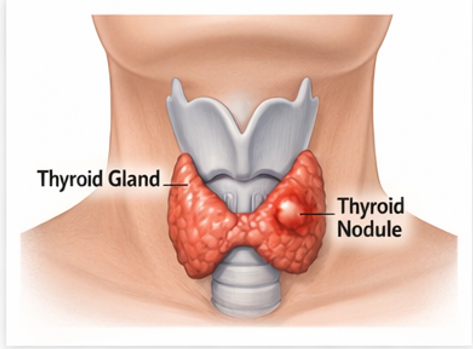
A thyroid nodule is simply a lump inside the thyroid gland. The thyroid is a small butterfly-shaped gland in the front of your neck.
Important fact:
Most thyroid nodules are not cancer. Many are completely harmless.
But ignoring symptoms blindly? That’s not smart either.
Common Signs You Might Have a Thyroid Nodule
Here’s what real patients usually notice:
1. A Lump in the Neck
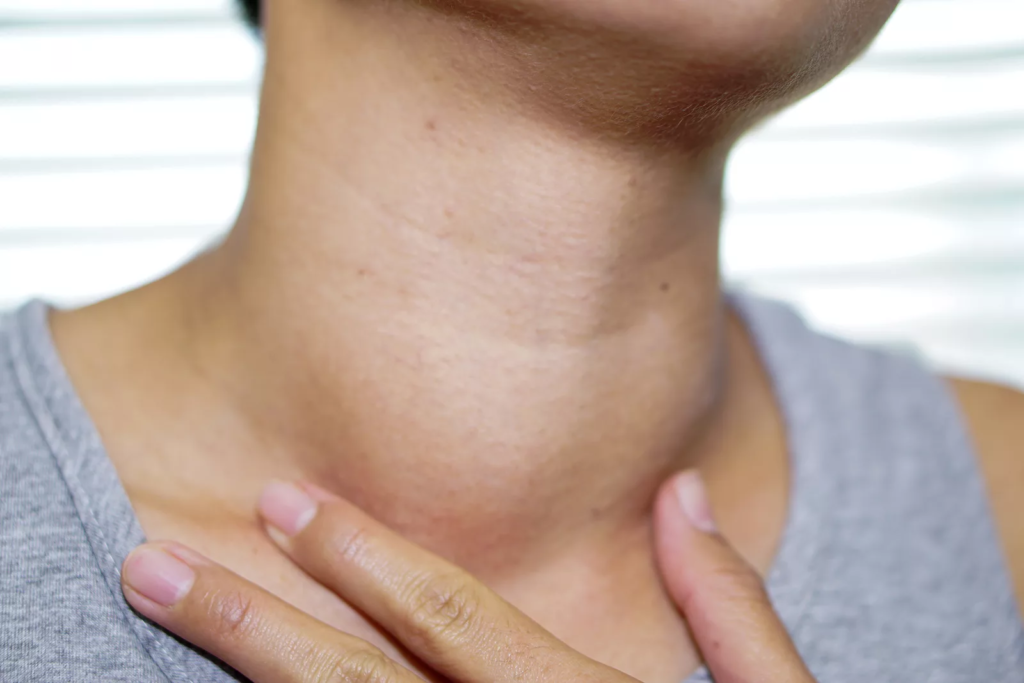
You may see or feel:
- A small swelling in the lower front of your neck
- One side looking slightly bigger
- A visible bump while swallowing
Some nodules are so small you won’t feel them. They are found only on ultrasound.
2. Discomfort While Swallowing

Large thyroid nodules can:
- Press on the food pipe
- Cause a “stuck” feeling
- Make swallowing uncomfortable
If you feel pressure but no infection symptoms, it needs evaluation.
3. Voice Changes
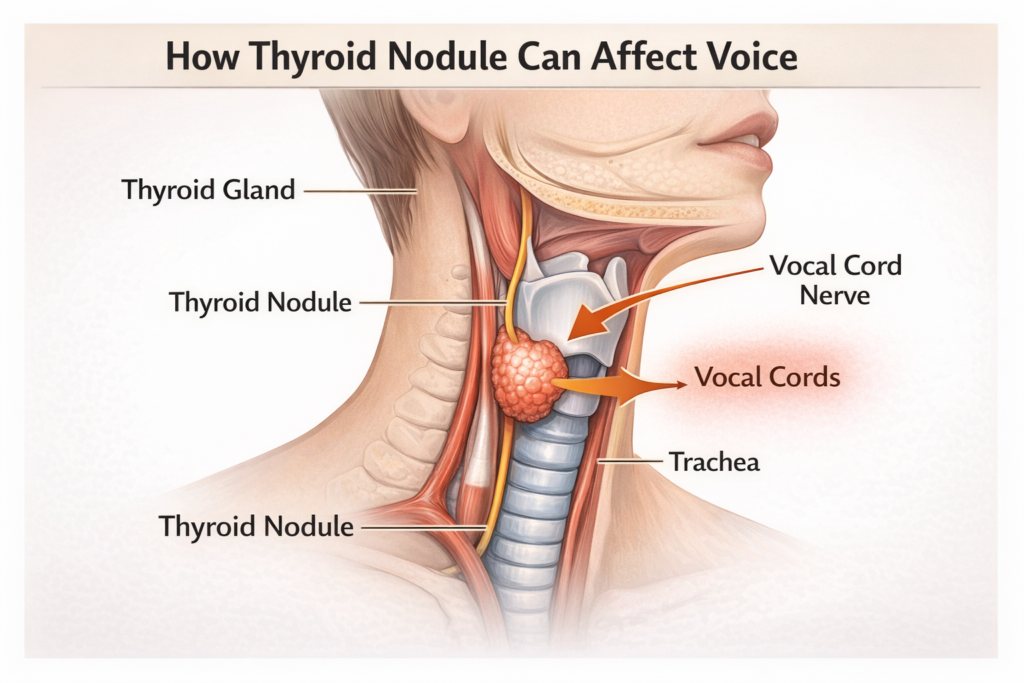
If a thyroid nodule presses on nearby nerves, you may notice:
- Hoarseness
- Voice becoming weak
- Difficulty speaking loudly
This is not common, but it’s a red flag.
4. Neck Tightness or Pressure
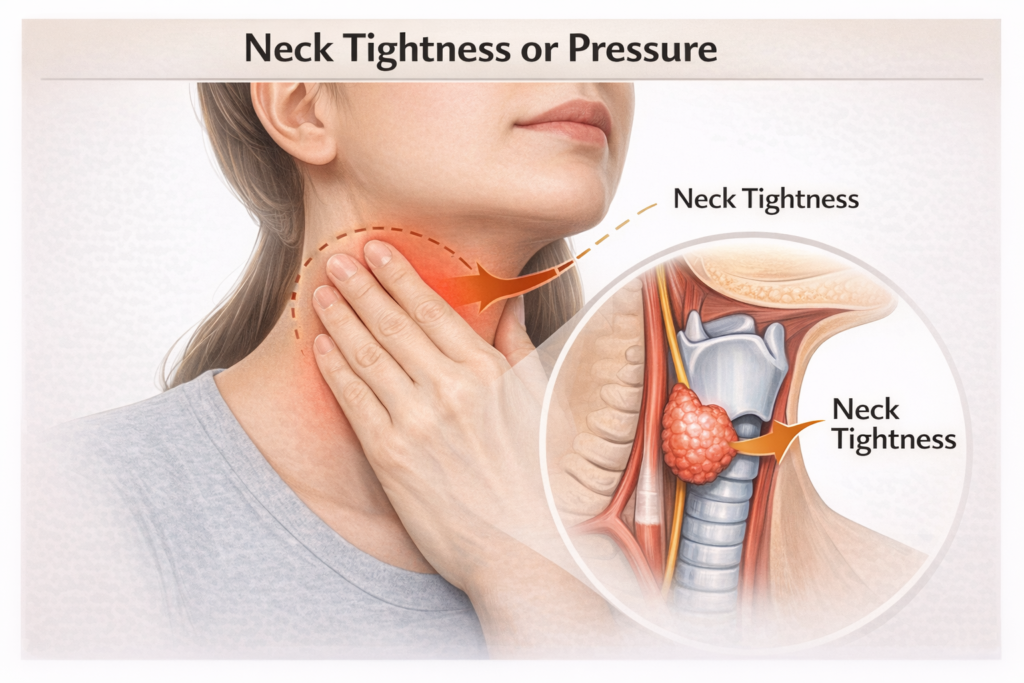
Some patients describe it as:
“Something feels heavy in my throat.”
Especially when lying down.
5. No Symptoms at All
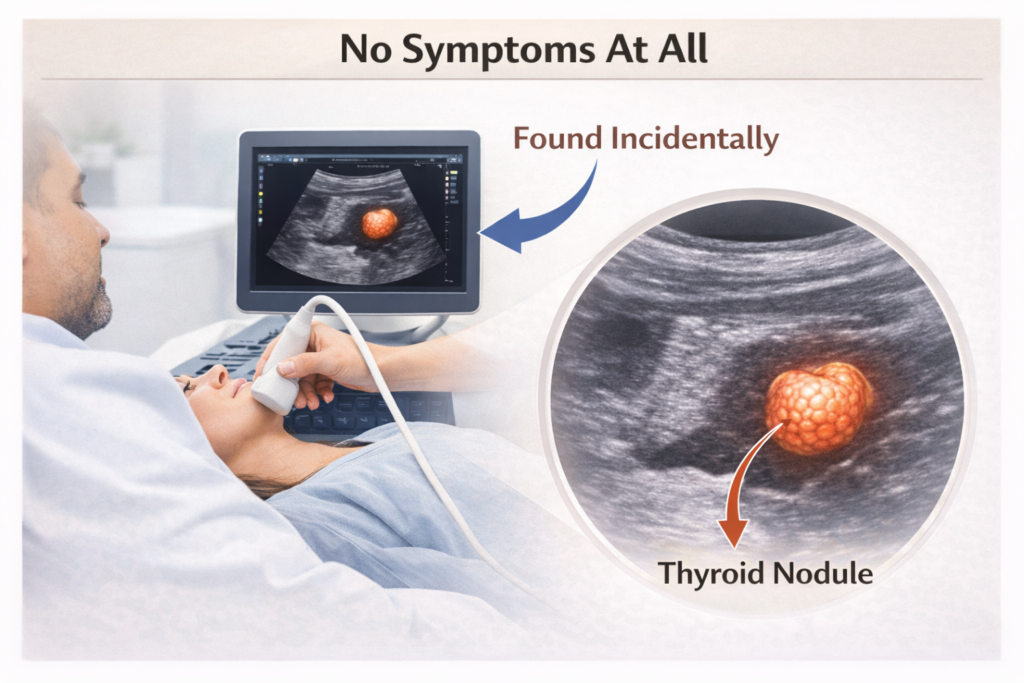
Here’s the truth many don’t realize:
Most thyroid nodules cause no symptoms.
They are found accidentally during:
- Routine health checkups
- Thyroid ultrasound
- CT or MRI scan for another reason
This is called an incidental thyroid nodule.
Can Blood Tests Detect a Thyroid Nodule?
No.
Thyroid blood tests (TSH, T3, T4) show how your thyroid is functioning.
They do not confirm whether a nodule is present.
You can have:
- Normal thyroid levels
- And still have a thyroid nodule
This confuses many patients.
When Should You Be Concerned?
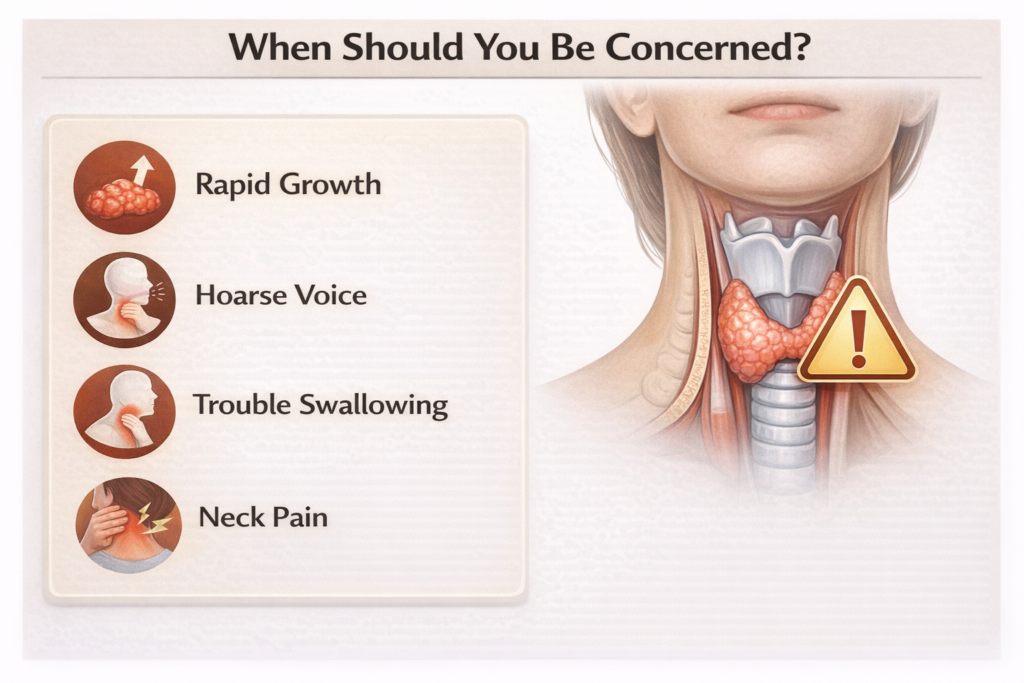
Don’t panic — but don’t ignore these signs:
- Rapid increase in size
- Persistent hoarseness
- Difficulty breathing
- Painful swelling
- Family history of thyroid cancer
These need immediate medical evaluation.
How Is a Thyroid Nodule Diagnosed?
Diagnosis usually involves:
1. Clinical Examination
A doctor checks the neck manually.
2. Thyroid Ultrasound
This is the most important test.
It shows:
- Size
- Type (solid or cystic)
- Suspicious features
3. FNAC (Fine Needle Aspiration Cytology)
If needed, a small needle sample is taken to check for cancer cells.
Not every nodule needs biopsy.
Are All Thyroid Nodules Cancer?
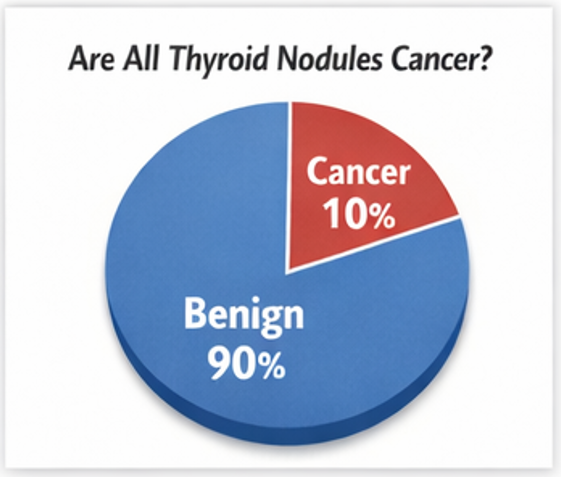
No.
Over 85–90% of thyroid nodules are benign (non-cancerous).
But the only way to know safely is proper imaging and evaluation.
Blind reassurance or blind fear — both are wrong.
Do All Thyroid Nodules Need Surgery?
Absolutely not.
Treatment depends on:
- Size
- Symptoms
- Ultrasound findings
- FNAC results
Options may include:
- Observation and follow-up
- Minimally invasive treatments like thyroid nodule ablation
- Surgery (only when necessary)
The Smart Way to Approach a Suspected Thyroid Nodule
- Don’t self-diagnose.
- Don’t assume it’s cancer.
- Don’t ignore persistent neck swelling.
- Get a proper ultrasound from a qualified radiologist.
- Follow evidence, not fear.
If you feel a lump in your neck or notice unusual throat discomfort, don’t panic — but don’t delay evaluation either.
Most thyroid nodules are harmless.
Some need monitoring.
A few need treatment.